What are you looking for?
A self-lubricating bearing is designed to maintain a low-friction sliding interface without depending on continuous external grease or oil delivery. In powder-metallurgy versions, a controlled pore network can store lubricant and release it at the shaft interface during operation, making the bearing attractive for compact mechanisms, intermittent maintenance environments, high-volume assemblies, and applications where a grease fitting or circulating oil system is undesirable.
The phrase “self-lubricating” does not mean “frictionless,” “maintenance-free under every condition,” or “suitable for any load and speed.” Engineers still need to define shaft material, surface condition, bearing pressure, sliding velocity, duty cycle, temperature, contamination, housing fit, running clearance, alignment, expected life, and the lubricant system inside the bearing. A bearing that performs reliably in a lightly loaded electric actuator may fail quickly if the same design is placed in a hot, contaminated, oscillating joint with poor alignment.
This guide explains the selection logic behind oil-impregnated sintered bearings and related bushings. It is written for product engineers, sourcing teams, quality managers, and buyers who need to compare candidate designs rather than simply identify a component by name. Hengji manufactures powder-metallurgy components for automotive and industrial mechanisms, and its current bearing bush product page identifies the material designation MPIF35-CTG-1001-K30. Because the final bearing performance depends on the complete tribological system, drawing review and application data should be evaluated together before a material or fit is frozen.
A self-lubricating bearing is a plain sliding bearing that provides or maintains lubrication at the contact interface through its material structure, embedded lubricant, solid-lubricant system, or a combination of these mechanisms.
Unlike a rolling-element bearing, a plain bearing has no balls or rollers separating the moving surfaces. The shaft slides directly against the bearing bore, so the design must control friction, wear, heat generation, clearance, and lubricant availability. “Self-lubricating” therefore describes how the sliding interface is supported; it does not identify one universal material or one universal construction.
Sintered metal bearings are especially important because powder metallurgy can intentionally retain interconnected porosity. After sintering, the porous structure can be impregnated with oil. During operation, local temperature and pressure changes help move lubricant toward the sliding surface. When the shaft slows or stops, part of the oil can be drawn back into the pore network. This reservoir behavior is one reason oil-impregnated powder-metal bearings are widely associated with compact motors, actuators, fans, appliances, office equipment, vehicle mechanisms, pumps, and general machinery.
ISO 5755:2022 covers specifications for sintered metal materials used for bearings and structural parts, while the Metal Powder Industries Federation maintains Standard 35-SLB for self-lubricating bearings. These standards matter because a drawing should not rely on a vague phrase such as “bronze bushing.” Material chemistry, density, lubricant, dimensions, press fit, running clearance, and performance criteria must be defined at an engineering level.
A self-lubricating bearing is often a good candidate when the assembly has limited access for routine greasing, when external grease could attract dirt, when a compact radial package is valuable, or when high production volume favors a near-net-shape bearing. It is not automatically the best option for extreme shock, severe misalignment, abrasive contamination, very high temperature, or duty cycles that exceed the validated pressure-velocity and thermal limits of the selected material system.
A self-lubricating bearing works by keeping a usable lubricant or low-friction phase close to the sliding interface so that shaft motion does not depend entirely on an externally replenished lubricant film.
For an oil-impregnated sintered bearing, the microstructure is part of the lubrication system. Metal powder is compacted into the desired geometry and sintered so that the particles metallurgically bond while controlled porosity remains. The component can then be impregnated with a compatible oil. The amount, viscosity, additives, oxidation stability, and temperature capability of that oil are part of the bearing design, not an afterthought.
When the shaft begins to rotate or oscillate, the contact zone experiences frictional heating and local pressure. These conditions can encourage oil to migrate from the interconnected pores toward the bore. The released oil supports boundary or mixed lubrication and reduces metal-to-metal contact. During rest periods, capillary forces can help redistribute lubricant into the porous structure. The mechanism is dynamic: temperature, speed, bearing pressure, orientation, oil viscosity, pore geometry, and duty cycle all influence how well the reservoir functions.
This explains why two visually similar bushings can have very different service lives. A higher-viscosity oil may maintain film strength at one operating point but create excessive drag at another. A bearing with unsuitable porosity can hold too little oil or have weak mechanical properties. An improperly sized bore can wipe lubricant away, raise heat, or allow impact loading. A poorly finished shaft can act like a file against the bearing surface.
Self-lubrication also includes systems that use solid lubricants, polymer liners, graphite plugs, or composite layers. Those technologies should not be treated as interchangeable with porous sintered metal. If a project is switching from one bearing family to another, the engineer should compare friction behavior, load capacity, temperature, speed, start-stop conditions, dimensional stability, corrosion, and contamination resistance instead of assuming that the label “self-lubricating” guarantees equivalent behavior.
A self-lubricating bearing describes a functional lubrication concept, while “bushing” usually describes the physical form of a plain bearing sleeve or flanged sleeve installed between a shaft and housing.
In everyday engineering language, “bearing” and “bushing” are often used loosely. A bushing is typically a replaceable cylindrical or flanged liner that supports radial motion, guides a shaft, or protects a housing bore. A self-lubricating bearing can be a bushing, but not every bushing is self-lubricating. A solid steel sleeve that requires scheduled grease is a bushing; an oil-impregnated sintered bronze sleeve is both a bushing and a self-lubricating plain bearing.
| Decision Factor | Oil-Impregnated Self-Lubricating Bearing | Grease-Lubricated Solid Bushing | Rolling-Element Bearing |
|---|---|---|---|
| Contact mode | Sliding contact with internal lubricant reservoir | Sliding contact with externally supplied lubricant | Rolling contact through balls or rollers |
| Typical package | Compact sleeve or flange | Compact sleeve or flange | Usually larger radial envelope for races and rolling elements |
| Maintenance concept | Reduced dependence on routine relubrication | Often requires scheduled grease or oil | May be sealed-for-life or periodically lubricated depending on type |
| Contamination sensitivity | Depends on pore system, seals, shaft and environment | Grease can help exclude contamination but can also trap particles | High sensitivity to raceway contamination in many precision designs |
| Shock and oscillation | Must be checked against bearing pressure and lubrication regime | Can be robust with suitable material and lubrication | Brinelling, false brinelling and raceway effects may govern |
| Selection focus | Material + porosity + oil + PV + fit + clearance | Material + grease + fit + clearance + maintenance interval | Dynamic/static load rating + speed + preload + sealing |
The distinction matters during sourcing. If a buyer requests only “bushing,” suppliers may quote different constructions that meet the dimensional drawing but not the intended lubrication strategy. If a buyer requests only “self-lubricating bearing,” suppliers may still need to clarify whether the project expects porous bronze, porous iron, a metal-polymer composite, a solid-lubricant insert, or another design.
For Hengji projects, the most useful RFQ is therefore not a one-line component name. It should include a drawing, shaft diameter and material, housing material, radial load, motion type, speed or oscillation frequency, temperature, contamination level, target life, preferred lubricant constraints, and inspection requirements. Those inputs allow the supplier to evaluate whether the requested architecture is physically appropriate before discussing piece price.
The best self-lubricating bearing material is the one whose strength, porosity, lubricant compatibility, wear behavior, corrosion resistance, and thermal characteristics match the actual shaft and duty cycle.
Sintered bronze is a familiar solution because copper-based alloys can provide good conformability, corrosion behavior, and sliding characteristics. Sintered iron-based bearings can offer different strength and cost characteristics and may be attractive where loads, geometry, or system economics point in that direction. The correct choice should come from the required properties rather than the color of the component.
Hengji’s current bearing bush page lists the material as MPIF35-CTG-1001-K30. MPIF material codes are useful because they communicate an industry-defined material system more precisely than a generic phrase such as “bronze.” For a production drawing, the material designation should be paired with the required dimensions, lubricant, inspection criteria, and application expectations.
When comparing material candidates, engineers should ask five questions. First, can the bearing support the required pressure without excessive permanent deformation? Second, does the pore structure retain enough lubricant while preserving adequate mechanical integrity? Third, is the lubricant stable across the operating temperature and environment? Fourth, is the material compatible with the shaft and any corrosion exposure? Fifth, can the part be manufactured and inspected consistently at production volume?
For projects using a cylindrical bearing sleeve, the interface with the shaft is just as important as the bearing material. A hard, smooth, round, properly aligned shaft can dramatically reduce abrasive and adhesive wear compared with a rough or damaged shaft. If the shaft surface changes after plating, heat treatment, coating, or grinding, final clearance must be calculated from the finished condition rather than the pre-finish drawing.
Material selection should also consider storage and transport. Porous bearings containing oil can require cleanliness controls and packaging that prevent dust ingress or lubricant loss. Cleaning methods used later in assembly must not unintentionally strip the impregnated oil. If the component will see aggressive solvents, high humidity, fuel, coolant, or other fluids, compatibility should be validated rather than assumed.
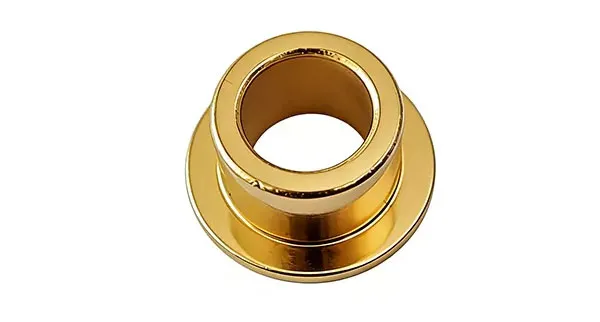
Porosity determines how a sintered self-lubricating bearing stores and transports lubricant, while the impregnation process determines what lubricant occupies that pore network and how consistently it is distributed.
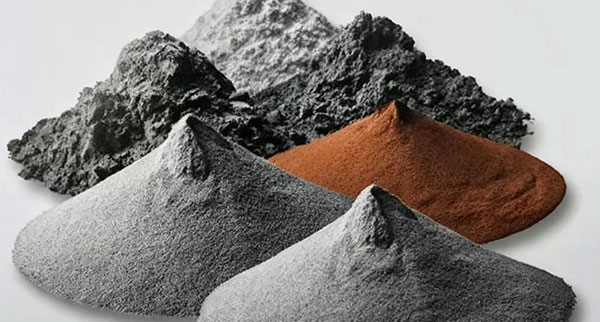
Powder metallurgy is useful for this application because porosity can be an engineered feature rather than a defect. In a structural gear, excessive porosity may reduce strength. In an oil-impregnated bearing, a controlled interconnected pore network is necessary to create the internal reservoir. The engineering challenge is balancing lubricant capacity with the mechanical properties required by the load.
The underlying powder metallurgy process affects particle bonding, dimensional change, density distribution, pore connectivity, and final geometry. Powder characteristics, compaction, tooling, sintering atmosphere, time and temperature, sizing, and impregnation all influence the finished bearing. For that reason, a buyer should evaluate process control and inspection records instead of treating every sintered bushing with the same nominal chemistry as equivalent.
Oil selection is equally important. Viscosity that is too low may not provide adequate film strength at high temperature and load; viscosity that is too high can increase drag and may not move through the pore structure as intended at low temperature. Additives can change oxidation stability, wear protection, corrosion behavior, and compatibility. The lubricant should be selected against real operating conditions, including startup temperature, steady-state temperature, duty cycle, and exposure to other fluids.
Impregnation quality also affects consistency. A production control plan may consider part cleanliness before impregnation, vacuum or pressure cycle stability, oil condition, post-impregnation handling, and an agreed method for verifying lubricant content where required. These controls are more meaningful than visual inspection alone because two bearings can look identical while containing different lubricant volumes.
Engineers should also be careful when applying additional coatings or cleaning steps. A plating process, aggressive degreaser, high-temperature bake, or solvent wash can change the condition of an oil-impregnated bearing. Any downstream operation that affects the pore network or stored lubricant should be included in the process review before mass production.
A self-lubricating bearing is commonly screened by bearing pressure, sliding velocity, and the combined PV value because these variables influence contact stress, heat generation, lubricant-film behavior, and wear.
Bearing pressure is often estimated from the radial load divided by the projected bearing area. For a simple cylindrical radial bearing, projected area is approximately bore diameter multiplied by bearing length. Sliding velocity is related to shaft surface speed. The PV value is the product of pressure and velocity, providing a useful first-pass indicator of how demanding the operating point is.
For example, suppose a bearing operates at an average projected pressure of 2 MPa and a surface velocity of 0.5 m/s. The calculated PV is 1 MPa·m/s. That number is not automatically acceptable or unacceptable. It must be compared with validated limits for the exact bearing material, lubricant, temperature, motion pattern, shaft condition, and life target. Oscillating motion can behave differently from continuous rotation even when a simple average speed calculation appears similar.
Peak loads also matter. An assembly with a low average load may experience short impact events that damage the bore or collapse the local lubricant film. Start-stop cycles can spend more time in boundary lubrication than a continuously rotating shaft. Small angular oscillations may repeatedly work the same portion of the bearing rather than distributing wear around the circumference.
Thermal balance is another part of the calculation. Friction generates heat, and the housing must remove that heat. A larger bearing may reduce pressure but increase sliding area and frictional power. A tighter clearance may improve guidance but raise viscous drag and temperature. A longer bearing can improve projected area but may become more sensitive to shaft deflection or misalignment. Bearing design is therefore a system optimization, not a single formula.
If the project is comparing self-lubricating PM bearings with another near-net-shape process such as metal injection molding, the process decision should follow function. Conventional press-and-sinter PM is particularly suited to controlled porosity and axial compaction geometries, while MIM is generally selected for small, three-dimensionally complex dense parts. Using a denser process simply because it sounds more advanced can remove the very pore network that an oil-impregnated bearing needs.
A self-lubricating bearing can only perform as designed when the housing fit, post-installation bore, shaft clearance, alignment, and sliding-surface finish remain inside the validated assembly window.
The bearing is usually installed with an interference fit so it remains fixed in the housing. Pressing the bearing into the housing can reduce its internal diameter. That means the free-state bore dimension is not necessarily the same as the installed running clearance. The supplier and customer should agree whether critical dimensions are controlled before or after installation and what gauge or fixture represents the functional condition.
Housing material matters because aluminum, steel, polymer, and cast housings have different stiffness and thermal expansion. A fit that is safe in a rigid steel housing may distort a thin aluminum boss. Temperature changes can also alter shaft-to-bearing clearance. If the shaft and housing expand at different rates, the cold clearance and hot clearance can be meaningfully different.
Alignment is equally important. A long bearing with a slightly misaligned shaft may develop edge loading, raising local pressure and temperature. Shaft runout, housing concentricity, shoulder squareness, press-in damage, and assembly stack-up should be included in root-cause analysis when wear appears only on one side of the bore.
Surface finish should be specified functionally. An extremely rough shaft can abrade the bearing, while a surface that is too smooth for a particular lubrication regime may not always produce the expected oil retention behavior. Hardness, coating, plating thickness, grinding direction, roundness, and waviness can all influence wear. When the shaft is heat treated or coated, the final surface should be the basis for qualification tests.
Installation methods also deserve control. Bearings should be pressed squarely using tooling that supports the correct face. Hammering can deform flanges, close the bore, or create local damage. Burrs in the housing bore can scrape the bearing outside diameter and alter fit. Cleanliness is essential because abrasive particles introduced during assembly can remain inside the sliding interface.
Self-lubricating bearing failures should be diagnosed by linking the wear pattern to load, lubrication, fit, temperature, contamination, and alignment rather than replacing the bearing with the same design and hoping for a different result.
A polished bore with gradually increasing clearance may indicate normal wear, while localized scoring can point to contamination, shaft roughness, or debris. Darkened surfaces and lubricant odor can indicate excessive temperature. Edge wear can signal misalignment or shaft deflection. Bore closure after installation may indicate too much interference or insufficient housing support. Corrosion marks may show that the selected material, lubricant, storage method, or environmental protection is unsuitable.
A useful supplier review starts with traceability. Ask how the powder and alloy are controlled, how compaction and sintering parameters are monitored, how dimensions are measured, how sizing is managed, how impregnation is controlled, and how lots are identified. For automotive or other demanding applications, the control plan should connect product characteristics to process controls rather than relying only on final inspection.
Second, ask how the supplier converts the assembly conditions into a bearing specification. A capable discussion should include load, speed, PV, duty cycle, shaft, housing, fit, clearance, temperature, lubricant, contamination, and life. If a supplier quotes only from outer diameter, inner diameter, and length, important risk variables may be missing.
Third, define validation at the part and assembly level. Dimensional reports confirm geometry, but they do not prove tribological life. Depending on risk, validation may include running tests, wear measurements, temperature monitoring, torque or friction checks, leakage or contamination exposure, and teardown inspection. The acceptance criteria should be agreed before testing so results are not interpreted after the fact.
Hengji’s powder-metallurgy portfolio includes automotive and industrial components, and the bearing bush page presents a sintered bronze construction with a specific MPIF designation. For a new application, buyers should send the drawing together with the shaft, housing, motion, load, environment, and target life. That information gives the engineering team a realistic basis for reviewing material and manufacturability instead of treating a self-lubricating bearing as a catalog commodity.
These FAQs summarize the most common engineering and sourcing questions about self-lubricating bearings, bushings, oil impregnation, fits, and application limits.
No. It can reduce or eliminate routine relubrication in a validated application, but service life still depends on load, speed, temperature, contamination, shaft condition, alignment, stored lubricant, and duty cycle. Inspection or replacement intervals may still be required by the equipment design.
Not always. A bushing describes a plain sleeve or flanged liner, while self-lubricating describes how the sliding interface obtains lubrication. A porous oil-impregnated bushing is a self-lubricating bearing; a solid bushing that requires external grease is not.
Controlled interconnected porosity can store lubricating oil and move it toward the sliding surface during operation. The pore network must be balanced with mechanical strength and dimensional requirements, so porosity is an engineered property rather than uncontrolled void space.
Provide the dimensional drawing, shaft and housing materials, radial load, motion type, rotational speed or oscillation data, temperature, contamination, target life, lubricant constraints, annual volume, inspection requirements, and any applicable material standard.
An interference fit compresses the bearing outside diameter inside the housing and can reduce the internal diameter. The final running clearance should therefore be reviewed in the installed condition, especially for thin sections or tight functional clearances.
Choose based on the complete requirement, not a generic rule. Strength, wear, corrosion, shaft pairing, lubricant, temperature, PV, geometry, cost, and standard material availability all matter. The supplier should review the application before recommending a final grade.
The right self-lubricating bearing is the one whose material, pore structure, lubricant, geometry, fit, clearance, and validated PV window match the real assembly rather than a generic catalog description.
For engineers, the most important lesson is to treat the bearing, shaft, housing, lubricant, and environment as one tribological system. For buyers, the most important lesson is to source from a specification rather than a name. A clear RFQ that includes load, motion, temperature, shaft condition, installation and life requirements gives the supplier a much better chance of proposing a stable production solution.
Hengji can use its powder-metallurgy component experience as the starting point for manufacturability discussion, but final performance should always be validated against the customer’s drawing and operating conditions. Early review is especially valuable because small changes in bearing length, flange geometry, housing fit, shaft finish, or lubrication strategy can prevent expensive failures after tooling and assembly are fixed.