What are you looking for?
Metal injection molding materials determine far more than the chemistry printed on a drawing. The selected alloy must be available in powder form, compatible with feedstock preparation and molding, debind without creating damaging defects, sinter to a stable microstructure, reach the required mechanical and corrosion properties, and remain economical at the planned part size and annual volume.
That is why material selection for MIM should start with functional requirements rather than a favorite alloy name. A corrosion-resistant latch, a wear-loaded automotive component, a magnetic part, and a high-temperature mechanism may all have similar geometry but require very different material systems. In some projects, the correct MIM grade is obvious. In others, a lower-cost alloy with heat treatment or a redesign that reduces mass can outperform an unnecessarily expensive material.
The Metal Powder Industries Federation describes MIM as a process using fine metal powders, typically less than 20 micrometers, blended with a binder to create moldable feedstock. The green part is molded, debound, and sintered in a controlled atmosphere. MPIF also maintains Standard 35-MIM for common metal injection molded materials. Its 2025 edition added standards for commercially pure titanium, Ti-6Al-4V, and a HIP’d and heat-treated MIM-420 stainless steel condition, while updating corrosion-resistance information for MIM 17-4 PH. These updates show why MIM material specifications should reference current standards rather than old property tables copied from unrelated processes.
Hengji’s current MIM product page positions metal injection molding for small, complex metal components and highlights near-net-shape production, material efficiency, dimensional control, and reduced secondary processing. The company’s public pages do not publish a complete alloy catalog, so any material discussed in this article should be treated as an engineering option to review with Hengji rather than an automatic statement of current production availability.
Metal injection molding materials are metal-powder alloy systems formulated with a temporary binder so they can be injection molded, debound, and sintered into dense metal components with controlled properties.
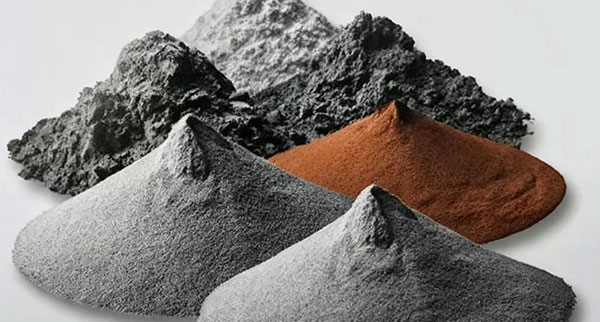
The metal powder provides the final alloy chemistry and much of the eventual mechanical behavior. The binder enables the powder to flow through an injection molding machine and fill a complex mold cavity. After molding, the binder is removed in a controlled debinding sequence, and the remaining porous powder skeleton is sintered so particles bond and the part densifies.
This means “material” in MIM has at least four layers. First is the nominal alloy, such as 316L stainless steel or 17-4 PH stainless steel. Second is the powder itself: particle size distribution, morphology, surface condition, oxygen content, and lot consistency. Third is the feedstock formulation, including solids loading and binder behavior. Fourth is the sintered condition, including density, microstructure, heat treatment, surface treatment, and any hot isostatic pressing or secondary processing.
A drawing that specifies only “stainless steel” therefore leaves too much open. Corrosion resistance, hardness, strength, magnetic response, weldability, passivation, heat treatment, temperature exposure, and cosmetic requirements can all change the preferred grade. The engineer should define the performance requirement and let the material specification follow.
Material standards help create a common language. MPIF Standard 35-MIM is maintained by the Metal Injection Molding Association standards committee and covers common MIM materials with engineering property data and explanatory information. Where a customer uses an internal specification, the supplier should cross-reference the required chemistry, heat treatment, test method, and acceptance criteria rather than assuming equivalence from the alloy name alone.
Metal injection molding materials must satisfy both manufacturing behavior and final-part performance because a powder alloy that looks attractive on a datasheet can still be difficult to mold, debind, sinter, or dimensionally control.
During molding, the feedstock must flow into thin sections and around complex features without separating powder from binder. Flow length, gate design, wall transitions, pressure, temperature, and shear can influence fill quality. A feedstock that is too viscous may short-shot a thin feature; one that is too sensitive to shear or thermal history may produce inconsistent green parts.
During debinding, the binder must leave the molded shape without collapsing the powder skeleton or creating internal pressure that causes cracks, blistering, distortion, or voids. Section thickness matters because binder must travel out of the part. Thick isolated masses and abrupt wall transitions can make debinding slower and less uniform even when the alloy itself is suitable.
During sintering, the part shrinks as powder particles bond and pores close. The shrink factor is not a universal constant. It depends on powder characteristics, solids loading, feedstock, debinding, alloy, furnace cycle, atmosphere, tooling compensation, and part geometry. MPIF’s 2025 MIM conference abstracts explicitly describe shrink factor, density, and sintered mechanical properties as outputs that must be established during material development.
Different alloys also respond differently to atmosphere, carbon potential, oxidation, precipitation hardening, solution treatment, aging, or other post-sinter operations. Stainless steels may require corrosion-sensitive controls; low-alloy steels may depend strongly on carbon and heat treatment; titanium requires particular attention to interstitial contamination. Material selection and process-route selection are therefore inseparable.
For a sourcing team, this is a useful distinction: asking “Can you mold 17-4 PH?” is not enough. The better questions are “What standard and condition will you supply? What process route is used? How are density, chemistry, dimensions, heat treatment, and corrosion-related requirements verified? What evidence will be included in PPAP or first-article documentation?”
Metal injection molding materials should be selected by ranking the required properties—strength, hardness, corrosion resistance, temperature capability, magnetic behavior, wear, density, biocompatibility, and cost—before choosing a familiar alloy name.
A decision matrix is more reliable than a one-dimensional “strongest material” approach. High hardness can reduce toughness. High corrosion resistance can add alloy cost. A precipitation-hardening stainless steel can offer high strength but may require a controlled heat-treatment condition. Titanium can reduce density and provide corrosion advantages but has very different raw-material economics and processing requirements.
| Material Family | Typical Selection Driver | Potential Strength | Potential Limitation | Questions to Confirm |
|---|---|---|---|---|
| Austenitic stainless steel, e.g. 316L | Corrosion resistance, ductility, non-hardening stainless behavior | Good corrosion performance and toughness for many environments | Lower hardness/strength than precipitation-hardening options in many conditions | Corrosion medium, passivation, magnetic limits, surface requirement |
| Precipitation-hardening stainless, e.g. 17-4 PH | Higher strength with stainless corrosion behavior | Heat-treatable strength and hardness | Properties depend on heat-treatment condition and corrosion requirement | Required H condition, hardness, tensile property, corrosion test |
| Martensitic stainless, e.g. 420 family | Hardness, wear and moderate corrosion needs | Can support high hardness after appropriate treatment | Corrosion behavior and toughness differ from austenitic grades | Hardness, heat treatment, passivation, edge/chip risk |
| Low-alloy steel | Strength, wear, case/core property balance, cost | Strong mechanical performance with heat treatment | Needs corrosion protection in many environments | Carbon control, heat treatment, coating, hardness profile |
| Titanium / Ti alloys | Low density, corrosion, biocompatibility or high value-to-mass use | High specific strength and corrosion resistance | Higher powder cost and strict processing control | Grade, oxygen/interstitial limits, surface, validation standard |
The table is a screening tool, not a substitute for a material standard. The same alloy name can be supplied in different sintered densities, heat-treatment conditions, and surface states. If the critical requirement is fatigue, impact, corrosion fatigue, sliding wear, or high-temperature oxidation, the customer should request data relevant to the actual service condition rather than relying only on room-temperature tensile strength.
Material selection should also be connected to geometry. A material that requires aggressive heat treatment may distort a thin asymmetric part. A very expensive powder may make a heavy component uneconomical. A corrosive environment may justify stainless steel, while a sealed dry interior mechanism may be better served by a lower-cost steel plus a finish. The best choice is the lowest-complexity material system that meets all required functions with adequate margin.
Stainless steel metal injection molding materials are commonly selected when a component needs a combination of corrosion resistance, appearance, strength, hardness, temperature capability, or cleanability in a complex near-net-shape geometry.
316L is frequently associated with corrosion resistance and ductility. It is an austenitic stainless steel and is often considered where a relatively soft, tough stainless material is preferable to a heat-treatable high-hardness grade. Engineers should still define the actual corrosion medium because “stainless” does not mean immune to chloride attack, crevice corrosion, galvanic conditions, or every cleaning chemistry.
17-4 PH is a precipitation-hardening stainless steel widely recognized for combining stainless behavior with higher heat-treatable strength. The important phrase is “heat-treatable condition.” A drawing should specify the required condition or final properties rather than simply writing 17-4 PH and leaving hardness or strength undefined. MPIF’s 2025 Standard 35-MIM update specifically notes updated corrosion-resistance information for MIM 17-4 PH, reinforcing the need to use current MIM-specific data.
420-family stainless steels can be considered when hardness and wear resistance are stronger drivers. MPIF’s 2025 MIM standard added a MIM-420 HIP’d and heat-treated material standard. That does not mean every MIM supplier offers the same route; it means the industry standard now includes a defined option that engineers can reference when the application and supplier capability align.
Surface condition is also important. Passivation, polishing, blasting, tumbling, coating, or other finishing can influence appearance, friction, contamination, and corrosion. For cosmetic parts, the allowable gate witness, parting line, ejector marks, and polishing direction should be included in the drawing or appearance standard. For functional parts, critical sealing or sliding surfaces may need specific roughness and flatness controls.
When a project uses metal injection molding to replace machining, the material comparison should include total processing. A machined 17-4 PH part and a MIM 17-4 PH part may share an alloy designation but differ in microstructure, density, surface condition, heat-treatment history, and dimensional route. Qualification should therefore compare finished-part performance rather than assume process interchangeability.
Low-alloy and hardenable steel metal injection molding materials are often considered when strength, wear, hardness, fatigue performance, or cost is more important than inherent stainless corrosion resistance.
Low-alloy steels can be attractive for automotive, power-tool, locking, drive, and mechanical components where a robust heat-treated structure is needed. Material choice can be combined with quenching, tempering, case-related treatments, coatings, or plating depending on the design. The engineering value comes from pairing a relatively economical alloy family with the mechanical condition the part actually needs.
Carbon control deserves special attention. In MIM, binder chemistry, debinding, furnace atmosphere, and alloy response can affect final carbon. A material that depends on hardenability should have a defined process window and final property verification. If hardness is critical, the drawing should state the scale, location, sampling plan, and heat-treatment condition rather than relying on a generic material callout.
For wear components, hardness alone is not enough. Contact stress, counterpart material, lubrication, impact, edge geometry, surface finish, case/core balance, and residual stress can change failure behavior. A brittle high-hardness part may chip where a slightly lower hardness with greater toughness would survive. If the component has thin teeth, sharp locking features, or snap loads, the design review should include local stress concentration.
Corrosion protection should be planned early. If a low-alloy MIM part will be plated or coated, the designer should consider coating buildup on threads, bores, teeth, or datum surfaces. Hydrogen-related risks, bake requirements, adhesion, salt-spray criteria, masking, and cosmetic expectations may also affect the process route. Secondary finishes can be highly effective, but they should be part of the quotation and control plan from the beginning.
Hengji’s automotive MIM product category provides an appropriate context for these discussions because automotive components frequently combine high-volume economics with tight packaging, strength, wear, corrosion protection, and assembly requirements. Buyers evaluating mim manufacturing should provide the complete functional specification so the supplier can decide whether alloy, heat treatment, coating, and geometry form a stable production route.
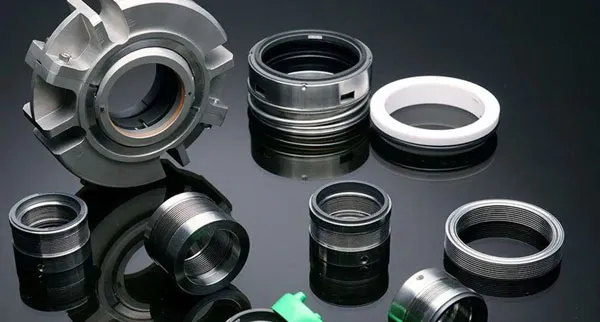
Titanium and specialty metal injection molding materials are considered when high specific strength, corrosion resistance, biocompatibility, heat resistance, magnetic behavior, or another high-value property justifies the added powder and process complexity.
The 2025 edition of MPIF Standard 35-MIM added material standards for commercially pure titanium and Ti-6Al-4V. This is important because current standardized data gives designers a clearer basis for specifying MIM titanium than relying on a wrought-material datasheet. However, titanium MIM still requires strict control of powder, binder, debinding, furnace atmosphere, and interstitial contamination.
Titanium is not automatically the right choice simply because a part must be lightweight. The designer should compare the mass saved against powder cost, part volume, machining avoided, assembly consolidation, corrosion need, and lifecycle value. MIM tends to be most compelling when the geometry is sufficiently complex to recover tooling and material costs through near-net-shape production.
Nickel-base, cobalt-base, controlled-expansion, magnetic, refractory, and other specialty systems may also be processed by parts of the MIM industry. Their value is application-specific. A heat-resistant turbocharger lever, for example, has very different priorities from a corrosion-resistant medical instrument or a magnetic actuator component. The alloy should be selected from the property requirement backward.
Specialty materials also increase the importance of test planning. Chemistry, density, tensile properties, hardness, corrosion, magnetic performance, oxidation, or biocompatibility may need different standards and sample geometries. A supplier may need dedicated furnace conditions or contamination controls. The quotation stage should therefore identify which properties require lot-level certification and which will be validated during development only.
Because Hengji’s public site does not list a complete specialty-alloy portfolio, buyers should not assume that every material mentioned in industry standards is currently available from Hengji. The efficient approach is to send the target alloy or property specification and ask the engineering team to confirm feasibility, minimum economical volume, tooling implications, and validation plan.
Powder size, shape, surface chemistry, solids loading, and binder formulation directly affect how metal injection molding materials flow, debind, sinter, and achieve stable dimensions.
MPIF describes MIM powders as typically less than 20 micrometers. Fine particles provide high surface area that supports sintering and complex cavity filling, but they also make powder handling, oxidation control, feedstock viscosity, and contamination more sensitive. Particle-size distribution can influence packing density and the amount of binder needed to create a moldable feedstock.
Spherical or near-spherical powders generally flow differently from irregular powders. Water-atomized and gas-atomized powders can have different morphology and surface behavior. The selection is not purely about shape; cost, alloy availability, oxygen, tap density, sintering response, and feedstock rheology all matter. Many commercial feedstocks use carefully engineered distributions rather than one simple particle size.
Solids loading is a critical development variable because too little powder increases the amount of binder that must be removed and can increase shrinkage, while too much powder can make the feedstock difficult to mold. Feedstock consistency must be maintained lot to lot. Moisture, contamination, thermal history, pellet size, and storage can influence processing.
These material variables explain why the injection molding technology page and the material specification should be connected. A material is not fully defined until the supplier can demonstrate a repeatable process route. When a customer transfers a part between suppliers, the new supplier may need to develop its own shrink compensation and molding window even when the nominal alloy remains unchanged.
For quality planning, engineers should distinguish incoming powder tests, feedstock tests, in-process green-part controls, sintered-part tests, and final functional inspection. Not every characteristic needs to be measured on every lot, but the control plan should identify which variables are leading indicators of final quality and how out-of-control conditions are contained.
A metal injection molding material specification should define the alloy and final performance condition while giving the supplier enough process freedom to manufacture the part consistently without leaving critical properties ambiguous.
Start with the applicable material standard and grade. Add required heat-treatment condition, hardness, tensile property, density or porosity requirement where functionally necessary, corrosion or coating requirement, surface condition, and any restricted substances. If the material must meet a customer-specific chemistry, list the limits and required certificate format.
Next, identify critical-to-function dimensions and surfaces. Material selection can affect shrinkage, distortion, machining allowance, and surface finish. If a bore will be reamed after sintering or a sealing face will be ground, the drawing should show the final dimension and the process plan should preserve enough stock. If a thread can be molded, the supplier should confirm tool access, shrink compensation, and gauge requirements.
Then define the validation level. Prototype samples, first-article inspection, capability studies, corrosion tests, heat-treatment records, material certificates, microstructure review, or functional endurance tests may be appropriate depending on risk. Automotive programs may require PPAP-related documentation, while other industries use their own approval systems.
Finally, provide annual volume and lifecycle expectations. MIM economics are strongly influenced by tooling and production scale. A part expected to run in the hundreds of thousands can justify a different tooling strategy from a part needed in a few thousand pieces. Material price also becomes more important as part mass increases, which is why coring, ribs, and part consolidation should be discussed during design.
A strong RFQ therefore includes the 3D model, 2D drawing, material or property target, annual volume, quality requirements, finish, application, mating parts, and critical failure modes. This gives Hengji or any qualified MIM supplier enough information to evaluate the alloy as part of a complete manufacturing system rather than quoting a material name in isolation.
These FAQs answer common questions about MIM alloy selection, stainless steels, titanium, heat treatment, density, and material qualification.
Common MIM families include stainless steels, low-alloy steels, tool or hardenable steels, nickel and cobalt alloys, magnetic alloys, titanium, and selected specialty metals. Availability varies by supplier, so the drawing should reference a current material standard and confirm the exact grade and condition.
Neither is universally better. 316L is often selected for corrosion resistance and ductility, while 17-4 PH is often selected when higher heat-treatable strength is needed. The correct choice depends on corrosion environment, strength, hardness, surface, heat treatment, and cost.
The nominal alloy may be similar, but process-specific property standards should be used because MIM density, microstructure, heat treatment, surface condition, and dimensional route differ from wrought or machined stock. Qualification should compare the finished-part requirement.
MIM is a densification process capable of properties approaching wrought materials, but the exact density depends on alloy and process. Do not assume a universal percentage. Specify the required property or standard and use supplier data for the selected material and condition.
Yes. MPIF Standard 35-MIM’s 2025 edition added material standards for commercially pure titanium and Ti-6Al-4V. Supplier capability must still be confirmed because titanium requires strict contamination and furnace control.
Send the drawing and 3D model, operating environment, loads, temperature, corrosion exposure, hardness or strength needs, finish, annual volume, quality standard, and any current material specification. Functional requirements help the supplier compare practical alloy options.
The best metal injection molding material is the material-process combination that meets final-part performance, dimensional stability, validation, and cost requirements—not simply the alloy with the strongest datasheet.
Stainless steels, low-alloy steels, titanium, and specialty alloys each solve different engineering problems. A disciplined selection process starts by ranking corrosion, strength, hardness, wear, temperature, mass, magnetic behavior, surface, regulatory requirements, and cost. The supplier can then determine whether the alloy is compatible with the proposed geometry, feedstock, debinding route, furnace, heat treatment, secondary operations, and production volume.
For Hengji projects, early material review should be paired with design review. A small change in wall distribution, gate location, mass, machining allowance, or heat-treatment condition can reduce risk before tooling. Buyers should request material confirmation against a current standard and ask for a clear validation plan rather than treating “MIM stainless steel” or “MIM alloy steel” as a complete specification.